The short version: GPT-6 Astra is OpenAI strongest closed-loop agent model to date. It opens Blender, KiCad and a browser by itself and turns an idea into something that actually runs. But that viral 99.9% on ARC-AGI-3 drops to 62.7% on a neutral harness.
1. TL;DR
- What it is: OpenAI new flagship, released September 3, 2026, replacing GPT-5.6 Sol. API model string
gpt-6-astra - Specs: 1.05M-token context, 128K max output, April 30 2026 knowledge cutoff, text and image input
- Strongest area: computer use. 72.6% on OSWorld 2.0 at roughly 40 minutes per task, versus 65.7% and 75 minutes for GPT-5.6 Sol, about 47% faster
- Standout demo: given only a sketch, it opened Blender, built the model, then moved it into Unreal Engine. Given only a circuit diagram, it opened KiCad and finished the PCB layout
- The benchmark asterisk: the 99.9% on ARC-AGI-3 is a provider-adapter harness score. The ARC Prize neutral harness gives 62.7%
- Independent testing: 61.2 on the Artificial Analysis Index, behind Claude Fable 5.1 at 65.7. Not a clean sweep
- Pricing: $10 / $50 per million tokens with cached input at $1, identical to Claude Fable 5.1. Included in Plus, Pro, Business and Enterprise plans, with no free tier
2. Quick Overview
| Item | Specification |
|---|---|
| Vendor | OpenAI |
| Release date | September 3, 2026 (staged rollout, paid tiers from September 4) |
| API model string | gpt-6-astra |
| Context window | 1,050,000 tokens |
| Max output | 128,000 tokens |
| Knowledge cutoff | April 30, 2026 |
| Input modalities | Text and image |
| Reasoning effort | Low through max, no none level |
| Not supported | Custom temperature, top_p, logprobs |
| Tool calling | Requires the Responses API |
| Input price | $10 per 1M tokens (cached input $1, cache writes $12.50) |
| Output price | $50 per 1M tokens |
| Surcharges | Fast mode doubles price; long-context surcharge doubles input above 272,000 tokens |
| Availability | ChatGPT (Plus, Pro, Business, Enterprise), OpenAI API, Microsoft Azure, AWS Bedrock |
| Safety tier | First publicly deployed OpenAI model classified Critical for cybersecurity capability |
3. Why This Generation Is Worth a Serious Look
For the past two years I have started every flagship review with the benchmark table. With GPT-6 Astra, what made me sit up was something else: the way it works has changed.
The old pattern was that I ask and it answers. Astra works on a target: it breaks the problem down, opens the software itself, executes, then checks its own results.
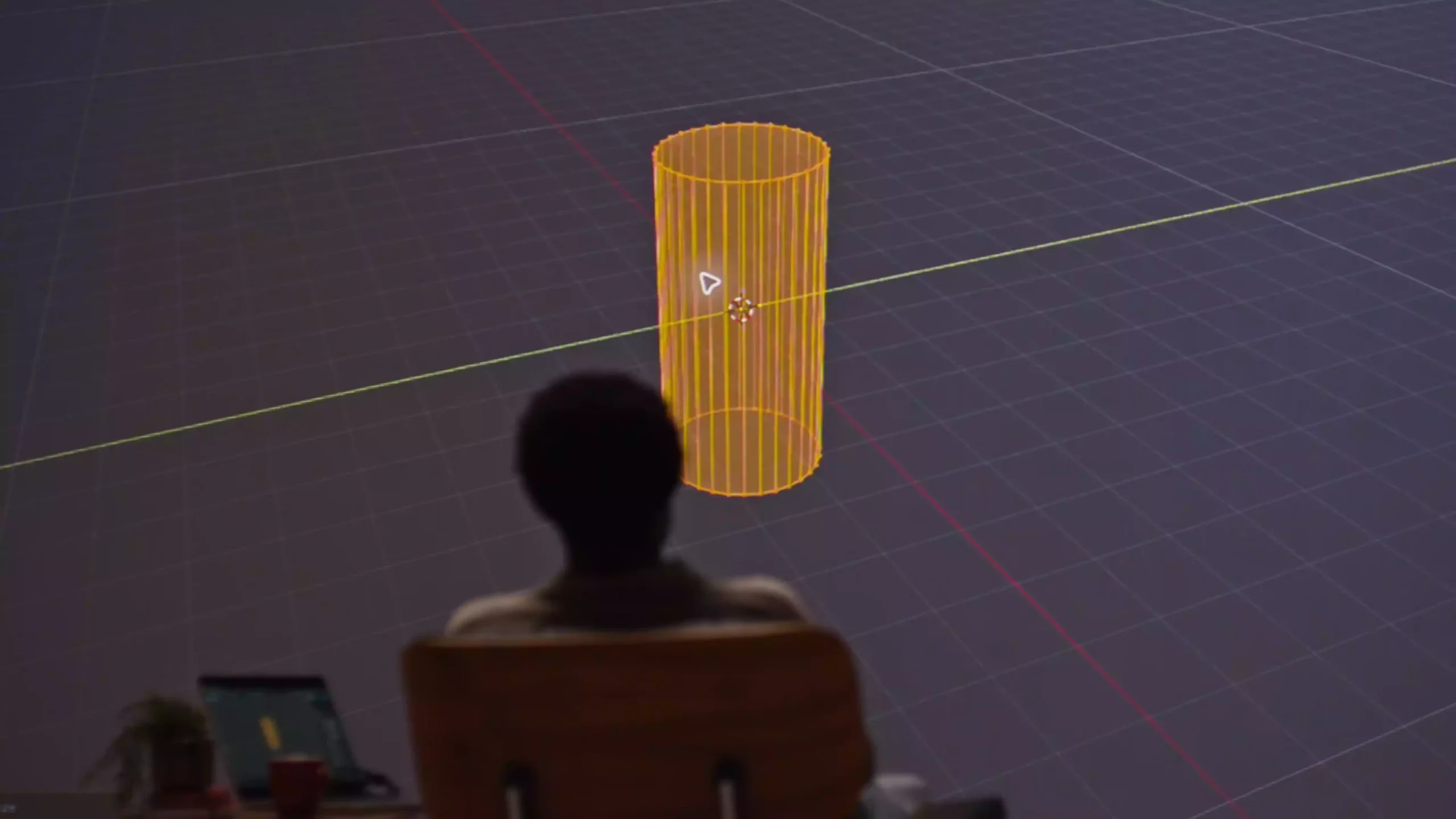
Concretely, OpenAI lists the capability domains as computer use, web browsing, software engineering, cybersecurity, science and professional work. The launch demos cover filling out a Form 1040 tax return, updating CRM records, managing a calendar, running frontend QA checks, laying out a PCB, building a spreadsheet model, drafting a legal document and producing Power BI reports.
The most striking example is 3D modeling.
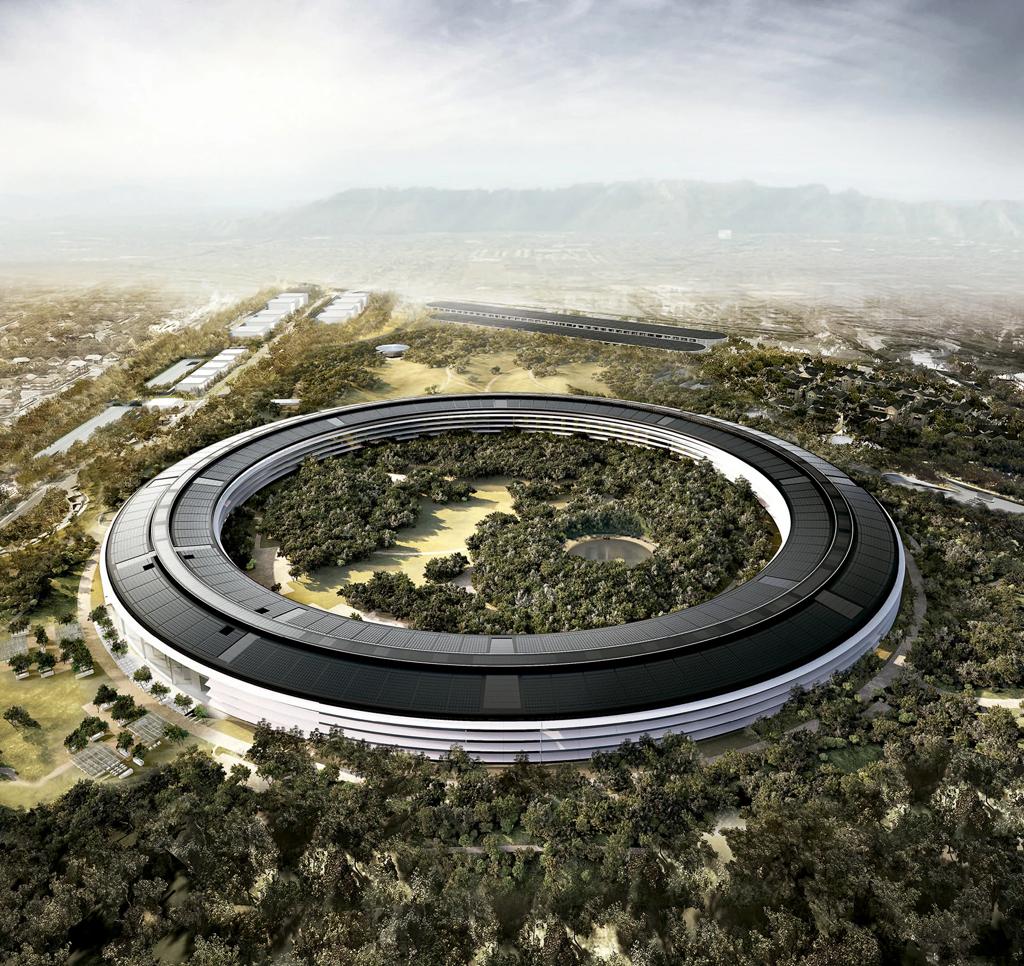
This is Apple Park rebuilt in Unreal Engine. Not a single rendered image, but a full environment: the curved surfaces of the ring building, the photovoltaic array on the roof, the vegetation inside the campus, the surrounding roads and landscaping. A 3D team used to spend months reaching this level of fidelity.
4. Test One: One Sketch to Blender to Unreal Engine
This is the capability I most wanted to verify myself, because it crosses three separate applications.
The flow was simple. I handed Astra a basic house sketch. It opened Blender by itself, built the model according to the dimensions and structure in the sketch, then exported it, imported it into Unreal Engine and set up materials and lighting.
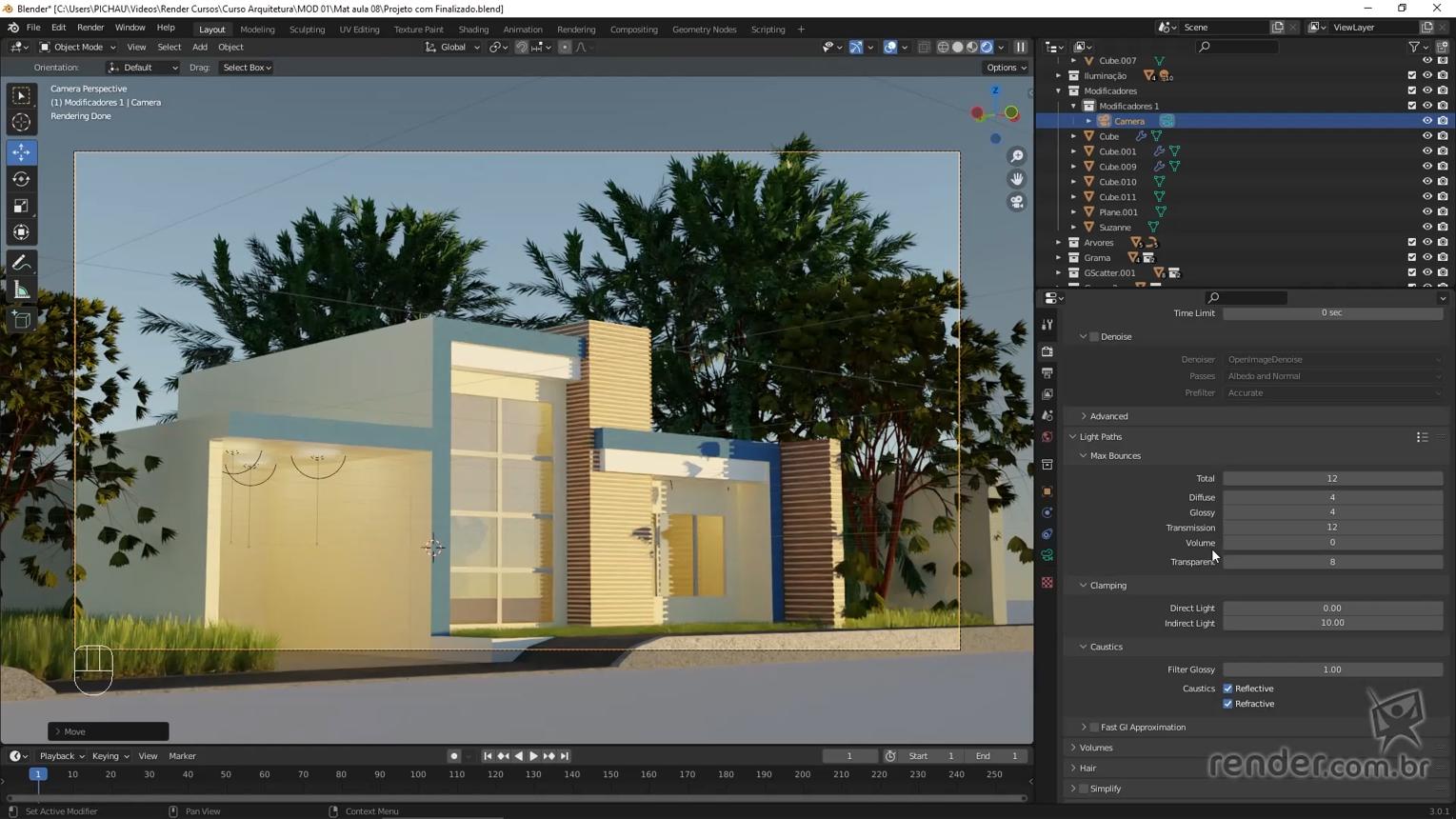
Look at the object hierarchy on the right: Cube, Cube.001 through Cube.014, then Plane.001, Sun.001, Camera and GSCamera.001. It built a structured scene, not a pile of geometry.
This matters far more than AI image generation. An image generator produces pixels, and moving a single window means regenerating the whole thing. Astra produces editable engineering files that a designer can keep working on. That is the difference between generating content and participating in a workflow.
A quick head-to-head
I gave the same design task and the same prompt to Claude latest Fable 5.1 and captured a comparison at the 14-second mark.
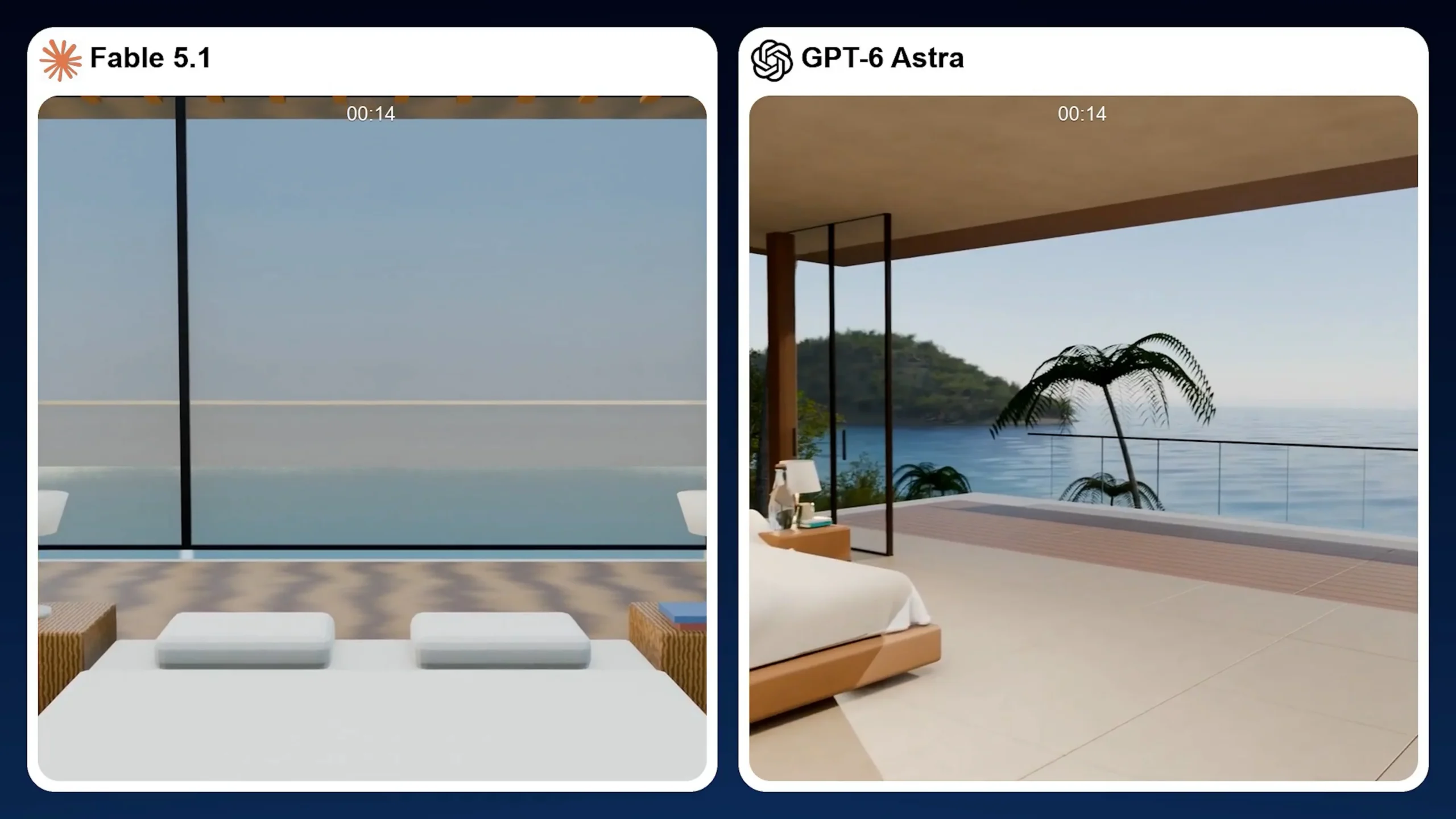
On the left is Fable 5.1: a structured, clean but sparse scene. On the right is Astra, with the ocean, a headland, palm trees, a glass railing, a bedside lamp and fabric folds all present.
But I will be honest about this: a single frame does not settle which model is stronger, and the two have different rendering styles. What actually matters is the process. Astra demonstrates a complete workflow from visual understanding to software operation to final output, and that is the dividing line between it and an image generation tool.
5. Test Two: One Circuit Diagram to a Finished PCB in KiCad
If 3D modeling only made designers nervous, this demo should make hardware engineers nervous.
I gave Astra a circuit diagram. It opened KiCad by itself and then did the following:
- Identified the components
- Identified the connections between components
- Understood the overall circuit structure
- Completed the PCB layout
- Produced a design file that is manufacturable
The critical part is that nobody told it how. I never said open KiCad, click here, place a resistor, connect this trace. I gave it the diagram and the goal.
That is the real boundary for an agent: not executing steps, but deciding what the next step is.
6. Test Three: Writing Contracts and Handling Documents
The least glamorous but most commercially valuable part of computer use is everyday office work.
In this demo Astra had to read a licensing agreement template and revise clauses on request. On screen it projected Google Docs onto the wall while the person sat back and watched, which is itself the point: the human moves from operator to reviewer.
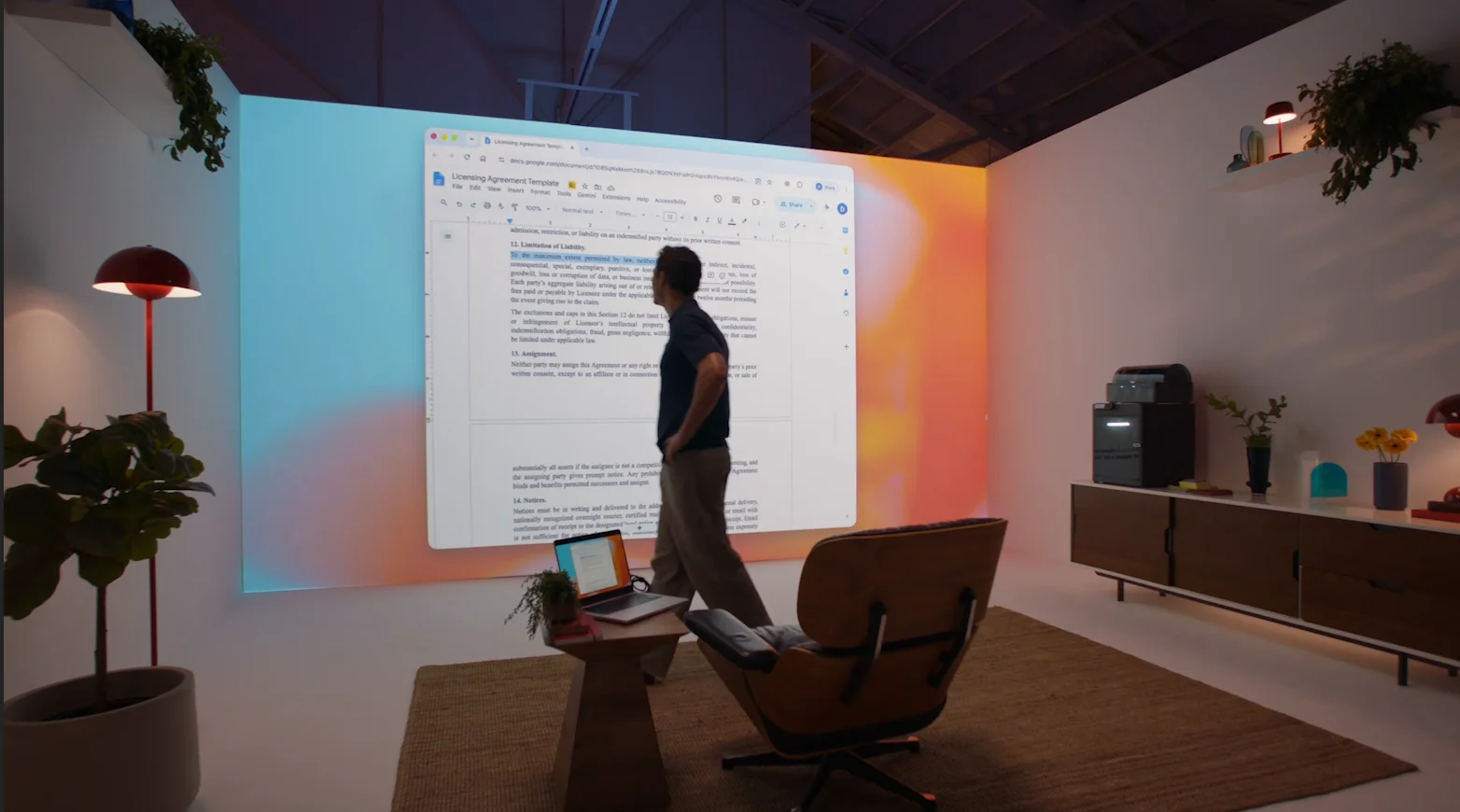
Clause 12 (Limitation of Liability), clause 13 (Assignment) and clause 14 (Notices) are all standard legal structure, and it was already editing those sections.
The official demos include a batch of similar tasks: filing a 1040 from a W-2, searching for a pediatrician, hunting for an apartment, booking a DMV appointment, kindergarten analysis and low-carb snack research. All of them are the kind of thing that is not hard but eats time.
Astra value is not that it does these better than a person. It is that it does them faster and nobody has to sit there watching.
7. The Detail That Matters Most: AI Helping Train the Next AI
Beyond raw capability, one detail in this launch carries a lot of weight.
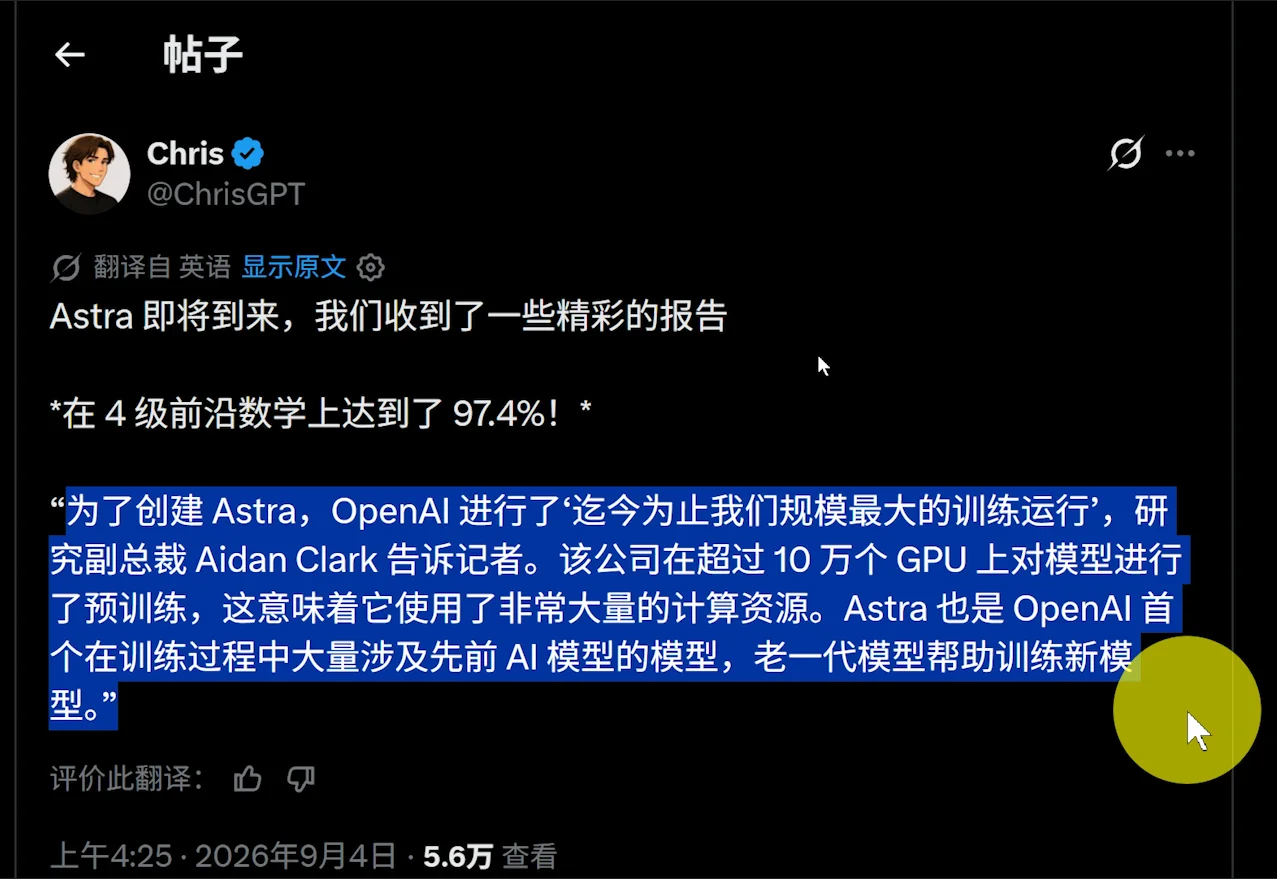
Aidan Clark, OpenAI vice president of research, told reporters two things:
- Training Astra used more than 100,000 GPUs, the company largest training run ever
- Astra is the first OpenAI model to involve previous AI models heavily in its own training, with older generations helping train the new one
The second point matters far more than the first. It used to be humans training AI. Now it is humans plus AI training the next generation, and the logical next step is AI helping research AI, then AI training the next generation outright.
If that loop keeps turning, what humanity supplies keeps shrinking: compute, power, data and the final objective.
8. Benchmarks: What Sits Between 99.9% and 62.7%
Start with the numbers OpenAI published.
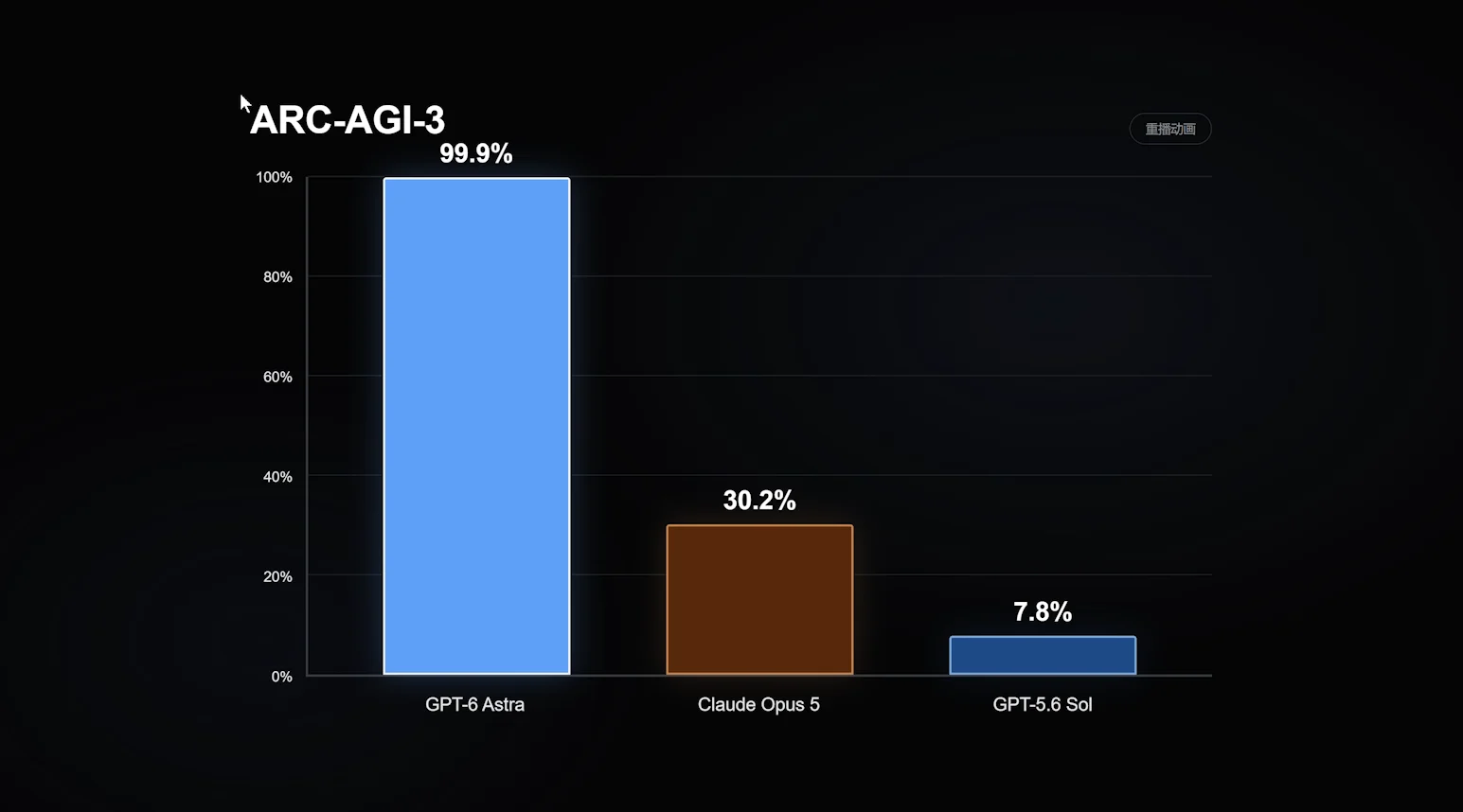
| Benchmark | GPT-6 Astra | Comparison |
|---|---|---|
| ARC-AGI-3 | 99.9% | Claude Opus 5 at only 30.2% |
| FrontierMath Tier 4 | 97.6% (98% on the official page) | Prior models 83.0 to 90.2% |
| ExploitBench (cybersecurity) | 100% | GPT-5.6 Sol at 78.5% |
| OSWorld 2.0 (computer use) | 72.6% | Sol at 65.7%, and roughly 47% faster |
| Terminal-Bench 4.0 (coding) | 57.9% | Fable 5.1 at 55.8%, Sol at 37.3% |
| Agents Last Exam | 59.3% | Rivals 53.6 to 55.5% |
| GPQA Diamond | 96.0% | Sol at 94.6% |
| Terminal-Bench Science 0.1 | 64.6% | — |
| HealthBench Professional | 63.4% | — |
| DeepSWE v1.1 | 74.1% | Fable 5.1 at 67.4% |
| AutomationBench / ScreenSpot-Pro | State of the art | — |
Source: OpenAI official launch page. Some figures were measured at maximum reasoning effort.
The 99.9% comes with an asterisk
On launch day the ARC Prize Foundation, the organization that built ARC-AGI-3, published its own independent evaluation, and the result was very different.
| Test environment | Score |
|---|---|
| OpenAI provider-adapter harness (reasoning state preserved across actions) | 99.9% |
| ARC Prize provider-neutral standard harness | 62.7% |
A 37-point gap. That is not a rounding difference. It tells you something important: the scaffolding around the model contributes enormously to the score, through tailored API access, specialized tools and custom prompting.
Neither number is fake. They measure different things. But the signal here is that the vendor controls the harness and also reports the number. When you compare Astra with Fable 5.1 or Gemini 3.8 Flash from now on, the first question to ask is which harness produced that figure.
Independent testing: not a clean sweep
Artificial Analysis ran its own numbers, and they are more sober.
| Metric | GPT-6 Astra | GPT-5.6 Sol | Claude Fable 5.1 |
|---|---|---|---|
| AA Intelligence Index v4.1.1 | 61.2 | 60.9 | 65.7 |
| Humanity Last Exam (with tools) | 57.2% | 65.0% | — |
In other words, Astra strength is heavily concentrated where OpenAI invested, meaning computer use, terminal coding, math and cybersecurity. On general hard problems it did not specifically optimize for, it can actually trail the previous generation. Artificial Analysis also found declines on GDPval task categories including banking support and scientific coding.
One more detail worth noting: OpenAI charter defines AGI as outperforming humans at most economically valuable work, and GDPval, the benchmark purpose-built to answer that question, was absent from the launch materials.
9. How to Actually Use GPT-6 Astra (Three Paths Plus Code)
Astra is a closed cloud model, so there is no local deployment at all, with no weights and no GGUF. Deployment here means wiring it into your workflow. There are three routes.
9.1 Path one: subscribe to ChatGPT (simplest)
- Eligible plans: Plus, Pro, Business, Enterprise
- No free tier: free users get nothing this cycle
- Extra capability: Pro, Business and Enterprise users also get GPT-6 Astra Pro, a higher-effort variant for harder tasks
- Important: enterprise workspaces are off by default. Administrators must enable Astra manually in settings
9.2 Path two: Codex and ChatGPT Work (for agent tasks)
Astra is live in Codex and ChatGPT Work, and the Codex harness was upgraded alongside it:
- A new note-taking mechanism lets it retain context across long sessions instead of repeatedly compressing history into summaries
- Task completion on Mind2Web is 1.9x faster than the GPT-5.6 Sol experience
For long-running coding work, this is the most practical shape of Astra on the OpenAI side today.
9.3 Path three: the API (for automation and batch work)
The model string is gpt-6-astra.
pip install --upgrade openai
export OPENAI_API_KEY="sk-your-key"
from openai import OpenAI
client = OpenAI()
# Important: tool calling requires the Responses API
resp = client.responses.create(
model="gpt-6-astra",
input=[
{"role": "system", "content": "You are an agent that can operate a computer."},
{"role": "user", "content": "Read ./data/sales.xlsx, build a year-over-year analysis, output charts and a 500-word summary."},
],
tools=[{"type": "code_interpreter", "container": {"type": "auto"}}],
)
print(resp.output_text)Four migration gotchas confirmed in the official release notes:
- No
nonereasoning effort level, so low through max only - No custom
temperature,top_porlogprobs, so stop tuning sampling parameters - Tool calls require the Responses API, so anyone still on Chat Completions must migrate first
- Astra Pro is a separate higher-effort variant, billed for harder tasks
9.4 Cost control checklist
| Lever | Effect |
|---|---|
| Use prompt caching | Cached input is $1 per 1M tokens, one tenth of the standard rate |
| Send batch jobs through batch | Batch processing is billed at half price |
| Watch input length | Above 272,000 tokens the long-context surcharge doubles input pricing |
| Use Fast mode sparingly | Double speed at double price, only worth it when latency matters |
| Reserve Astra Pro for hard tasks | The standard tier handles routine work fine |
10. Test Four: Three AI-Generated Games You Can Play Right Now
Astra is available to all paid users, so these games are genuinely playable. Here is every link from the original material, organized in one place.
| Game | Genre | Link |
|---|---|---|
| Desert CS shooter | First-person shooter | https://dust-ii-map.yelin8130.chatgpt.site/ |
| Kart-style racer | Racing | See the test below |
| Basketball | Sports | https://huhuhu.page.gd/COURTSIDE26.html |
| Infinite Garden | Sandbox | https://infinite-garden.yelin8130.chatgpt.site/ |
| Super Mario style | Platformer | https://mushroom-arcade-0905.jumaomaomaoju.chatgpt.site/ |
| Web Three Kingdoms | Strategy | https://sanguo-wind-cloud.amery2010.workers.dev/ |
| Balatro-style cards | Card game | https://balatro-v1-1.longyh2333521818.chatgpt.site/ |
| mosswing-quiet-flight | Flight | https://mosswing-quiet-flight.jack-514.chatgpt.site/ |
| Migratory bird battle | Model battle | https://houniao-model-battle-20260721.netlify.app/ |
| RB19 interactive sim | Engineering sim | https://rb19-engineering-lab.moraxc.chatgpt.site/ |
Test one: the kart-style racing game
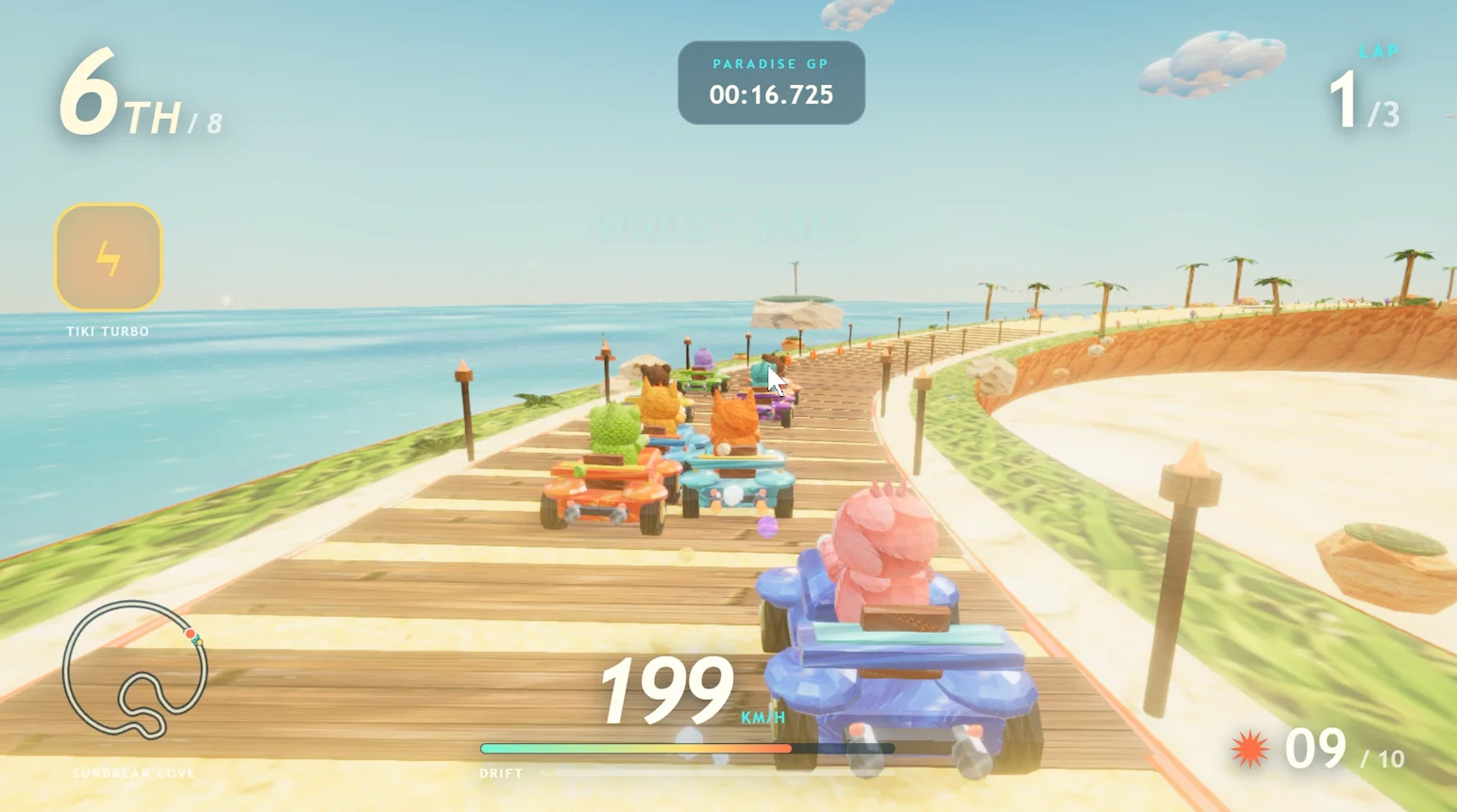
You get into the car and drive immediately. The first impression is smooth, and it fixes the old failure mode where AI racing games drive straight off the track.
The interface is surprisingly complete: eight karts racing at once, live position (I finished this run in 6th), 199 km/h, lap 1 of 3, the SUNBREAK COVE track in the PARADISE GP series, plus drift and a TIKI TURBO boost pickup. Wooden boardwalk, palm trees, coastline and clouds are all there.
It is still far from a commercial game, but the point stands: this was not built by a team over several months. It was generated directly by an AI from a natural language request.
Test two: desert map first-person shooter
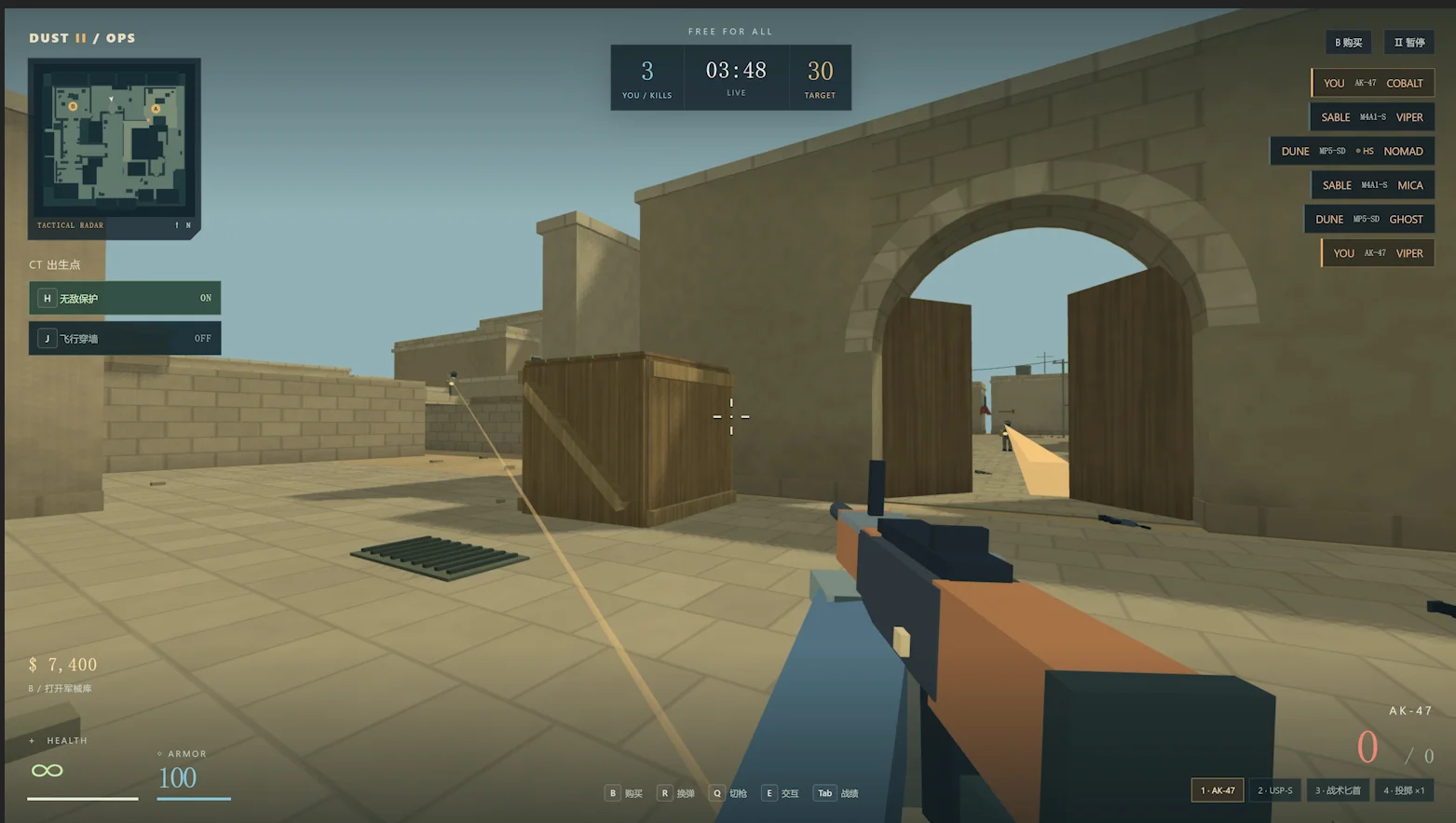
This one surprised me. The game is called DUST II / OPS and runs in free-for-all mode with a remarkably complete interface:
- Tactical radar in the top left with minimap and compass
- Scoreboard up top: 3 kills, 30 targets remaining, 3:48 elapsed
- Weapon list on the right: AK-47 COBALT, M4A1-S VIPER, MP5-SD NOMAD, M4A1-S MICA and MP5-SD GHOST, each with a skin name
- Economy panel bottom left: $7,400 in funds, unlimited health, 100 armor
- Debug toggles: CT spawn point, invulnerability ON, fly-through-walls OFF
- Control hints: buy, reload, switch weapon, interact, scoreboard
Shooting, reloading, weapon switching, movement and enemy engagement all work. More importantly, you can tell it what is wrong and it will change the game itself. That is where the real potential of AI game development lives.
Test three: the basketball game
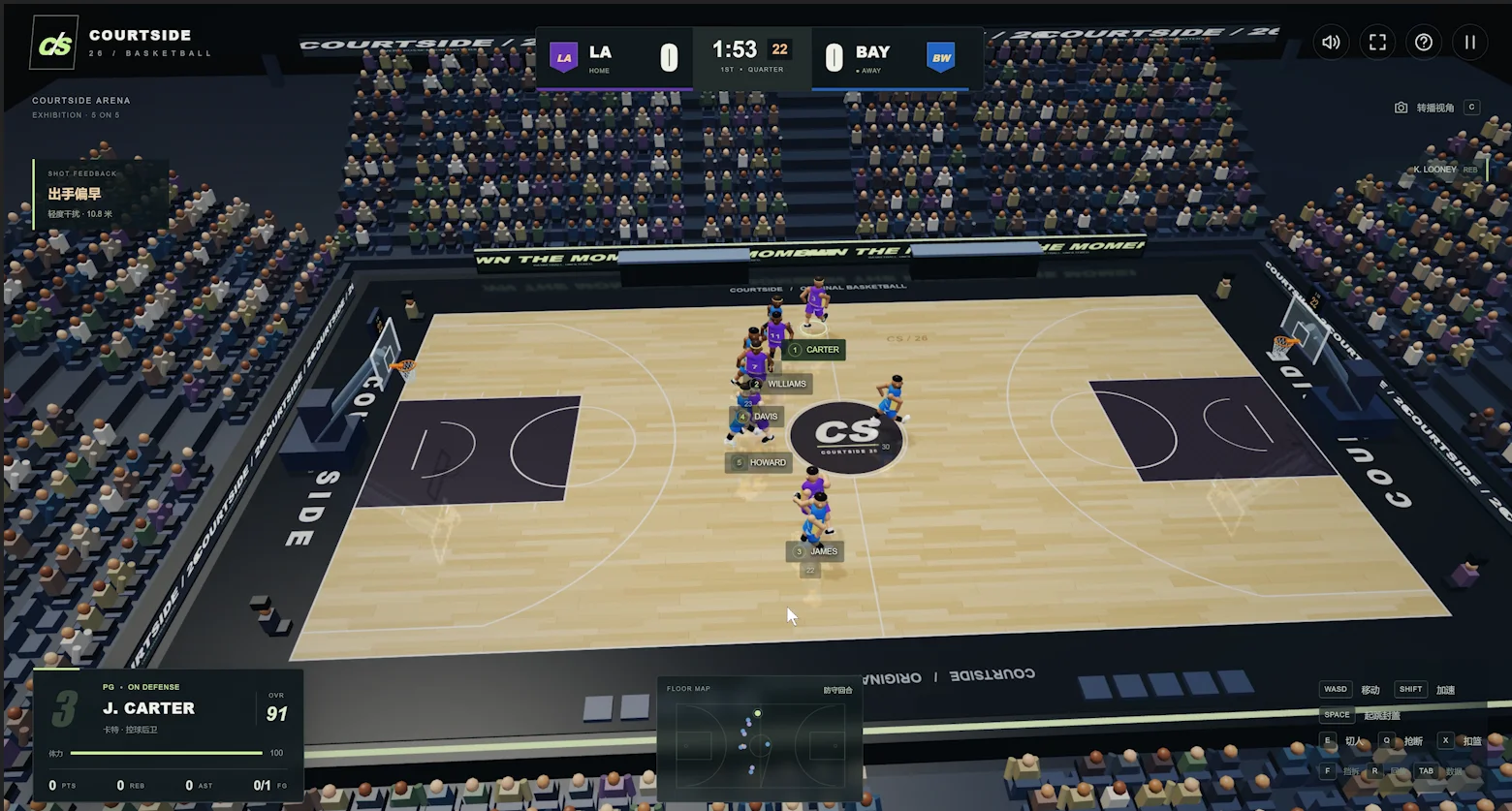
This is the weakest of the three, though the structure is solid: a COURTSIDE 26 broadcast-style interface, LA versus BAY, 1:53 left in the first quarter, a roster including CARTER, WILLIAMS, DAVIS, HOWARD and JAMES, a player card for J. CARTER at point guard with an overall rating of 91 and full stamina, plus crowd seating and court markings.
The problems are obvious: character animation is stiff, movement looks mechanical, and the game flagged one of my attempts as a shot taken too early at 10.8 meters. It is very far from a commercial NBA title.
But the framing matters: we are not discussing a product a game studio spent years building. We are discussing a game an AI generated from a plain language instruction.
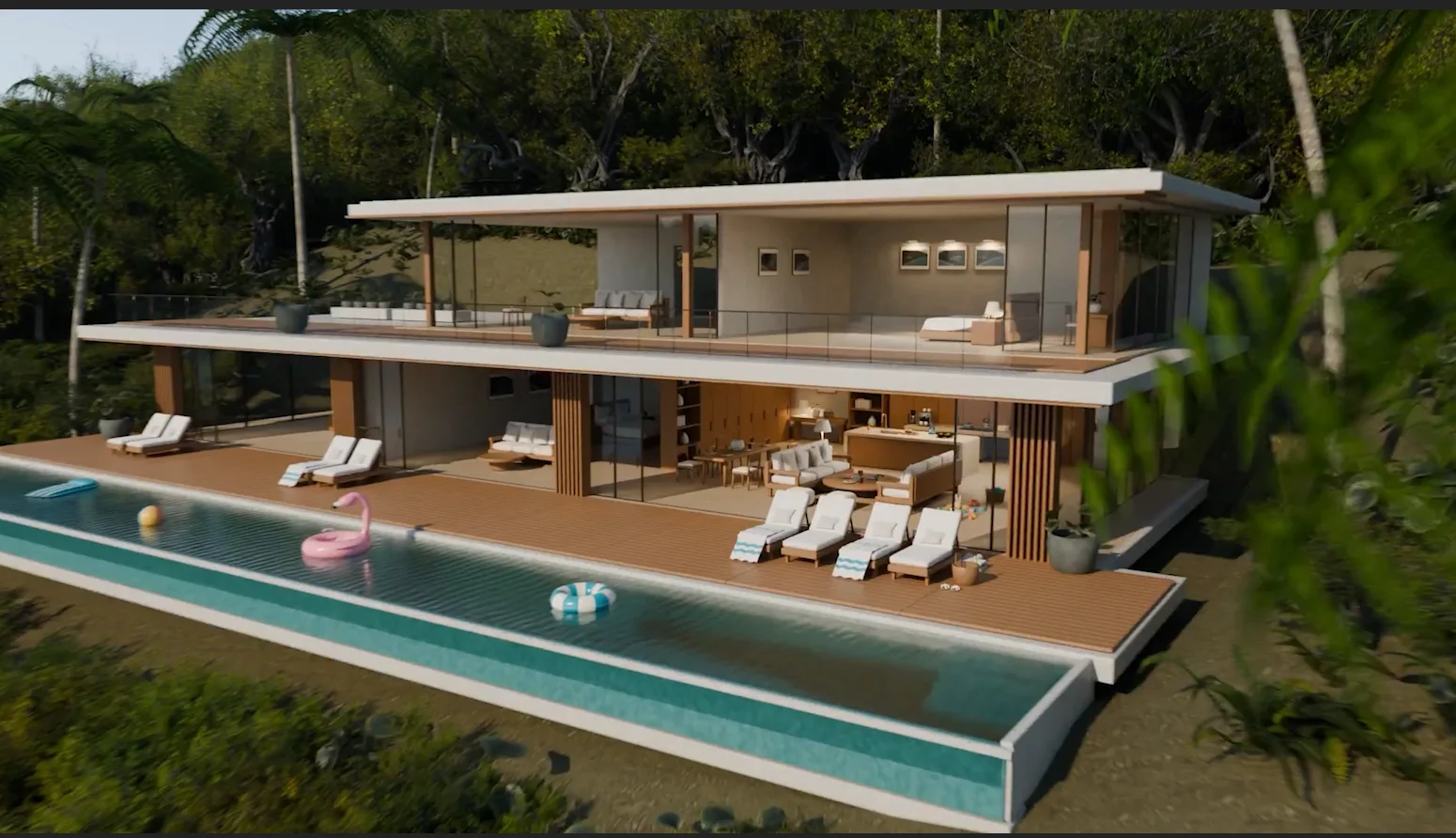
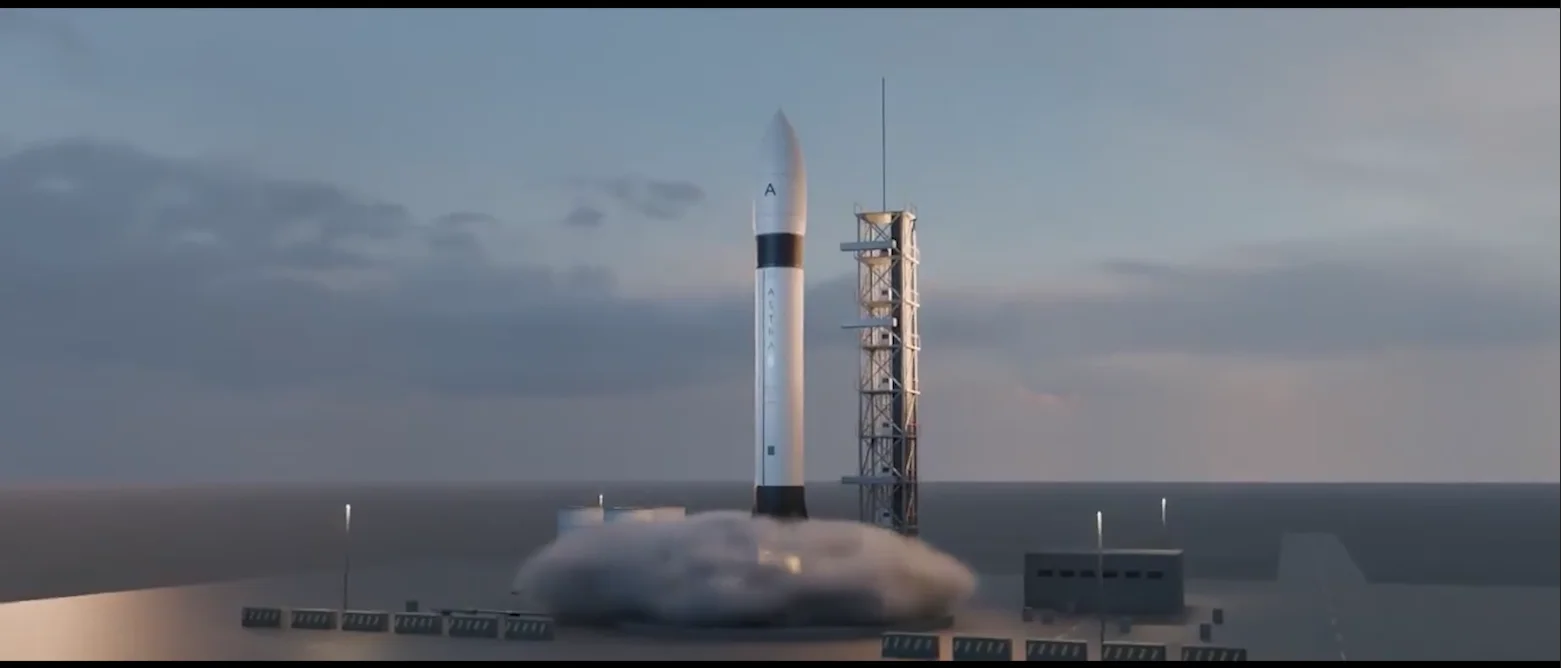
Bonus: three 3D generation samples
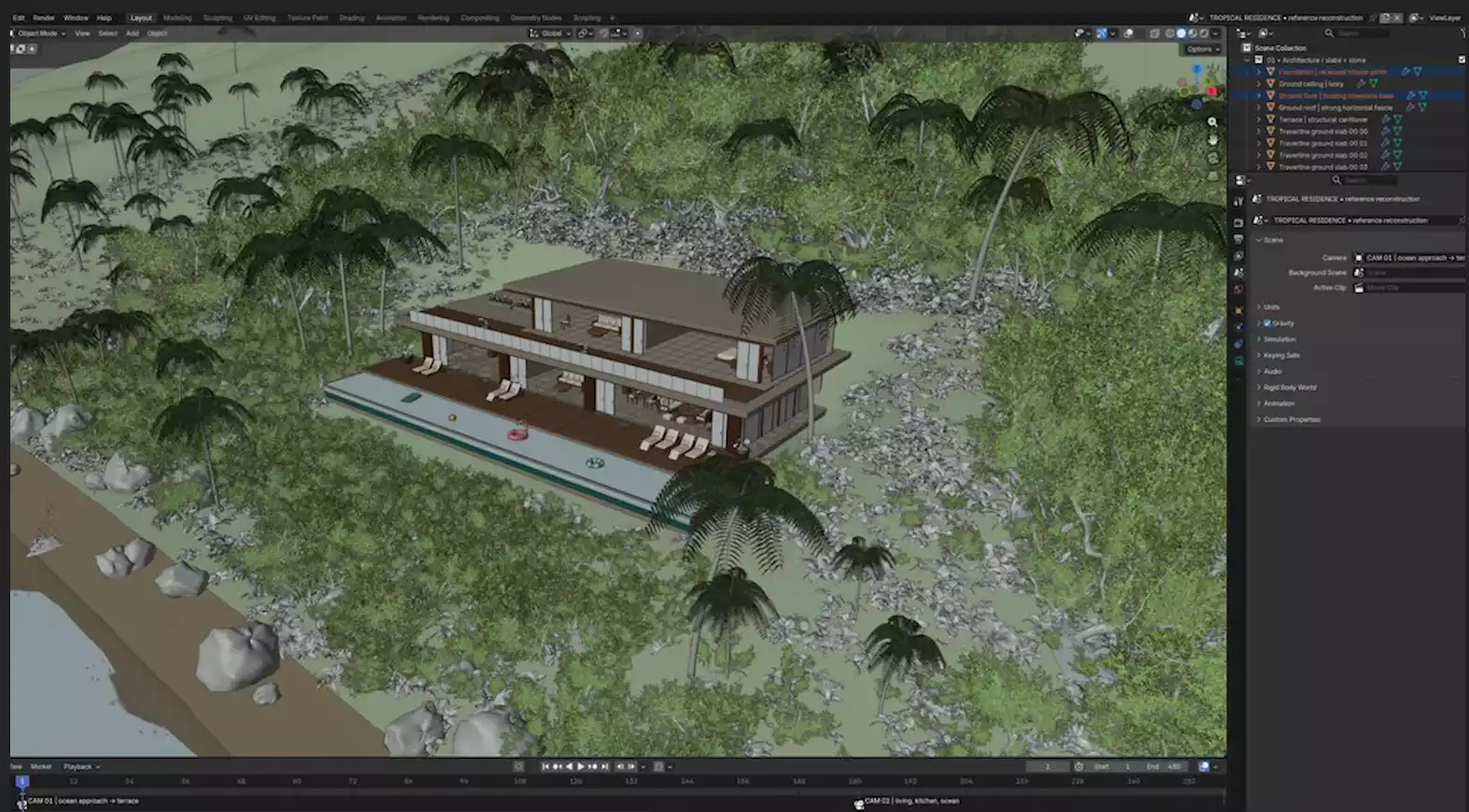
Astra also produced some memorable 3D work beyond games.
11. Will This Put Programmers and Designers Out of Work?
This is the question I get asked most, and Astra has only increased the volume.
My answer has not changed: it will disrupt the way work is done, not the professions themselves.
Before: humans execute, AI assists Now: AI executes, humans set the target, judge the result and make the final call
If everything you do is mechanical execution, writing CRUD to spec, pulling models to match a reference, formatting to a template, then yes, that is exposed. But there are things Astra still cannot do:
- Why should this product be designed this way?
- What do users actually need?
- What is the business objective?
- Which of these options should we choose?
Those judgments still require a person. Astra has made execution cheap, which makes judgment more valuable, not less.
12. FAQ
Q1. What is GPT-6 Astra and when was it released?
OpenAI flagship released September 3, 2026, succeeding GPT-5.6 Sol and described as the most intelligent and most aligned model OpenAI has shipped. API model string gpt-6-astra, 1.05M-token context, 128K max output, knowledge cutoff April 30, 2026. It started with a limited set of organizations, then reached ChatGPT Plus, Pro, Business and Enterprise users along with the OpenAI API, Microsoft Azure and AWS Bedrock. Official page: openai.com/index/gpt-6-astra
Q2. Does a 99.9% on ARC-AGI-3 mean AGI has arrived?
No. The 99.9% comes from an OpenAI-configured provider-adapter harness where reasoning state persists across actions. On the ARC Prize provider-neutral standard harness the same model scores 62.7%, a 37-point gap. The ARC Prize team stated plainly that saturating the benchmark would not represent proof of achieving AGI, because ARC-AGI-3 has deterministic, closed-ended mechanics while real work does not. One more telling detail: OpenAI charter defines AGI as outperforming humans at most economically valuable work, and GDPval, the benchmark built for exactly that question, did not appear in the launch materials.
Q3. What does it cost compared with Claude Fable 5.1?
Identical pricing: $10 per million input tokens and $50 per million output tokens. Fable 5.1 launched September 1 and Astra on September 3, both flagships landing on the same list price, which shows the frontier tier has settled into a clear price band. The detail differences favor either side depending on workload: Astra offers cached input at $1, cache writes at $12.50, a Fast mode at double price for double speed, and a long-context surcharge that doubles input pricing above 272,000 input tokens. Anthropic competes through token efficiency and cheap cache reads. Your workload shape moves the invoice far more than the list price.
Q4. Is it available everywhere, and how do I integrate it?
Official channels such as ChatGPT, the OpenAI API, Azure and AWS Bedrock require network access that many users in mainland China cannot reach directly, and the OpenAI API does not accept locally issued credit cards. In practice developers use regional Azure OpenAI or AWS Bedrock accounts, assessing compliance themselves, or domestic aggregation platforms. Be careful with aggregators, since they are often not serving the genuine gpt-6-astra, so verify the model string before drawing comparisons. If you only want to test the capability, start with a ChatGPT Plus subscription on the web and confirm it helps your workflow before moving to the API.
Q5. Can it run locally?
No. It is a closed cloud model with no released weights, no GGUF and no quantized builds, so there is no local deployment path. For a locally hosted agent model, look at the open-weight side, for example Qwen3.8-Flash-Next, a 125B MoE activating only 6B per token that runs on 24GB of VRAM with 64GB of RAM. The two are not substitutes.
Q6. Are the generated games actually playable, and how good are they?
They are playable, and every link is in section 10. Among the three I tested, racing is the most complete (acceleration, cornering, collisions, AI opponents, and it stopped the old habit of driving off the track), the shooter is second (radar, scoreboard, five weapon skins, economy system, debug toggles), and basketball is the weakest (solid structure, stiff animation, flagged as shooting too early). Impressive for a single-pass AI generation, but a long way from commercial quality.
13. Pros and Cons
Strengths
- 1.05M-token context with 128K output, making long-horizon agent work practical for the first time
- Computer use is the biggest leap this cycle: 72.6% on OSWorld 2.0, about 40 minutes per task, 47% faster than Sol
- It genuinely operates pro software: opens Blender to model and KiCad to lay out a PCB without being walked through the steps
- Alignment has hard evidence: on out-of-scope tasks GPT-5.6 Sol went beyond authorized targets 48% of the time. Astra did it 0% of the time
- The Codex harness was upgraded in step, delivering 1.9x faster task completion on Mind2Web with new long-session note-taking
- New API primitives for long-running work: async tool calling, mid-turn steering and dynamic reasoning effort switching
- Real ecosystem uptake: Cognition integrated Astra into Devin on launch day, and Higgsfield AI reports 20% fewer tokens on production creative workflows
Weaknesses
- The 99.9% on ARC-AGI-3 has an asterisk: the neutral harness gives 62.7%, a 37-point gap
- Not a clean sweep: 61.2 on the AA Index behind Fable 5.1 at 65.7, 57.2% on Humanity Last Exam behind Sol at 65.0%, and declines on some GDPval categories
- Twice the price of GPT-5.6 Sol at $10/$50, and there is no cheap tier at all
- Migration cost: no
temperature,top_porlogprobs, and tool calls must move to the Responses API - No free tier, so free users get nothing this cycle
- Cybersecurity capability is rated Critical, and OpenAI own chief scientist called the monitoring safeguards fragile, with a 20% compute-overhead safety system that will interrupt legitimate work
- Cannot be deployed locally, so it always requires connectivity and payment
14. The Verdict
What matters about GPT-6 Astra is not another chart-topping benchmark score. It is that an AI opening software and doing the work itself has finally reached a deliverable standard, which makes execution cheap. As for whether AGI has arrived, look at the number that falls from 99.9% to 62.7% and you will see we are not there yet. The direction, though, has genuinely changed.
15. Sources
- Official launch page: GPT-6 Astra: A new generation of intelligence
- Official release notes: OpenAI product release notes (including API migration changes)
- Official developer announcement: Introducing GPT-6 Astra (model card specs and pricing)
- ARC Prize independent evaluation analysis: GPT-6 Astra Arrives With a Benchmark Asterisk
- Independent benchmarks and AGI discussion: Is the AGI Era Finally Here?
- Pricing and market comparison: GPT-6 Astra lands: same price as Claude flagship
- Safety and independent retesting: AGI Claim Fails OpenAI Own Bar, Monitoring Called Fragile
- Code review integration analysis: OpenAI GPT-6 Astra is now available in Octopus
- Official demo source images: Manhattan environment original and Apple Park recreation original